Types of Crime Dramas
A Series
Contains the same characters throughout but each episode is broken down into different storylines.
Due to the short lengths of each episode story lines often develop quickly in a linear narrative
A Serial
Serial typically follow main story arcs that span entire television seasons or even the full run of the series, which distinguishes them from traditional episodic television that relies on more stand-alone episodes.
They rely on a more complex storylines, each episode is not complete and will follow on into the next episode.
Singles / off ones
One off based on a topical event.
The narrative often features that involves a serial killer as the main protagonist.
Brief Part 1
Produce a research portfolio that covers all of the followings areas.
- Research the history of the TV Crime Drama
- Research what makes a successful crime drama
- Audience Response
- Compare the opening of two crime dramas
Write an evaluation of the research you have found.
Crime Dramas Timeline
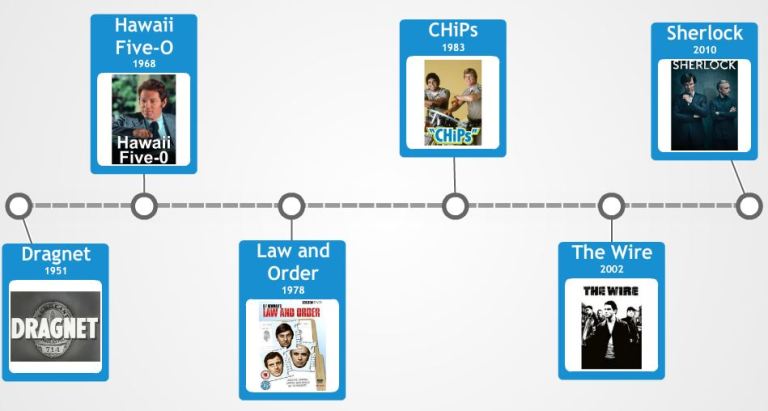
Intro – for this task we had to show the evolution of crime dramas through the years and talk about the key themes and points that separate them from the others. Below I have selected the crime dramas that I believe had the biggest impact on the genre.
Dragnet – is the original crime drama created by Jack Webb in the 1950s. It was very basic series with lots of mid ranged shots and simple cuts with no special transitions apart from the cross fade as well as to fade to and from black, this is due to the lack of technology and resources. The stories are often very basic with very fast plot progression due to the length of an episode, as well as that isn’t very much character plot.
Hawaii Five-O – is an American police procedural drama series produced by CBS Productions and Leonard Freeman. This show features a lot more complex camera movements and angles compared to Dragnet. They introduce a lot more experimental movements for the time its was filmed with a lot of tracking shots with the camera following characters as they move around scenes, this is mainly used in interrogations and other tense shots to build the suspension. A similarity between Hawaii Five-O and Dragnet is that its a series so it that follows the plot more then themes or character progression.
The Wire – is another American crime drama however it was one of the first to break away from the traditional series were each episode is different from the other, not focusing on the characters. This is due to The Wire being a serial so theirs a story arc that will span for the whole season usually. The thing that makes this stand out from the rest of the is that it started to focus more one themes such as poverty, inequality and racism. This is immediately shown in the first scene of episode one season one were the main character questions a witness about a recent shooting. The scene depicts the clear differences between the two people as the detective finds the witnesses attitudes and choices to be very strange and alien to him, this shows the theme poverty and ethnicity.
Sherlock – the opening of Sherlock was different from all the previous crime dramas as it uses cinematography to the show the viewer the perspective from inside sherlocks head, its does this to clearly depict the self conflict that goes through Sherlocks mind. This takes Sherlock to a new level as he solves cases whilst also having a constant battle with himself, and his drug addictions and the fact the no-one understands him showing his isolation from the world. The show mainly focuses on the character conflict then the actual crimes as it shows how John Watson struggles with his a past life in the army and how he is adapting to the new life with Sherlock. Though the show does keep the crimes interesting pitching them as unsolvable or unexplainable therefore they require Sherlocks help.
What Makes a Successful Crime Drama
People watch American TV crime dramas because there are intrigued by issues involving crime, justice, and equality under the law an example of this is the wire. They are often heavily action based with gun fights and a more violent plot line. However British people tend to watch gritty crime dramas that tackle the issues of character conflict as well as a dark plot.
Crime dramas storylines often depict a crime and viewers often follow the persons who try to solve the crime and that makes such shows popular. It is the genre that is binge watched the most. Crime dramas are often among the longest running shows of any television category due to there popularity.
Luther
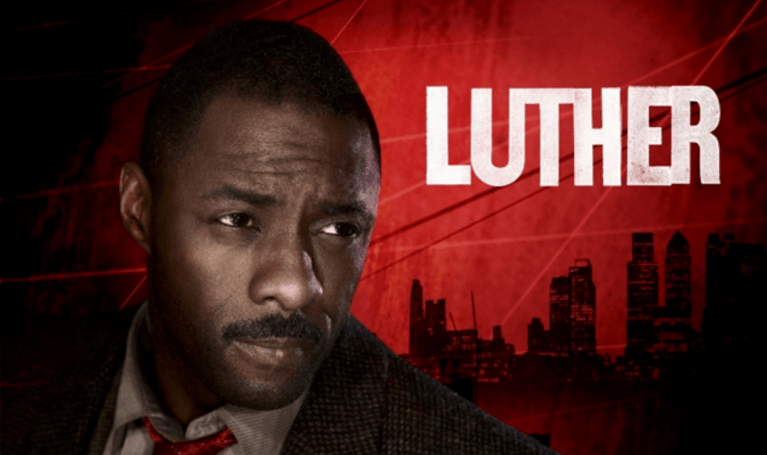
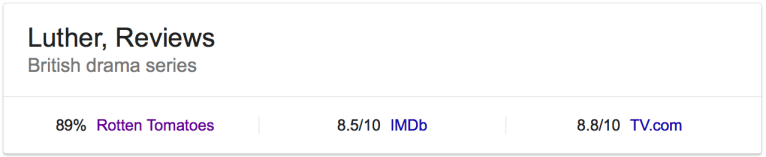
The first series of Luther aired in 2010 and received positive reviews from critics, getting an average of 5.9 million viewers per episode. It gets these views due to it engaging its audience through its great way of story telling, usually a crime drama will start off the episode with the crime and then spends middle section of the episode with slower plot and character progression and finally the arrest. However Luther doesn’t do this it which was a risky move however it payed off as the audience preferred the realistic and gritty theme, as the detective doesn’t always get the criminal in real life. This adds to the suspension of the show as it makes it unpredictable, the viewer doesn’t know if Luther will catch the killer. This matched with the great character conflict with Luther going through a divorce and his poor decisions he made at the being of episode one that one of the antagonists constantly holds against him. Luther constantly makes use of character conflict keeps the show entertaining due to his raw drive to catch the criminal forcing him to use unorthodox methods which differentiates it from crime dramas in the past.
Opening Scene
Luther is a dark and gritty crime drama and the show constantly reminds the viewer of this with the use of its cinematography and mis-en-scene, the shows murders typically take place at night and during the day the weather is usually grey with a cold look this makes it look as if theirs no escape as Luther moves from one case to the next as they get darker and darker. The cinematography is very clever as it shows the main characters motives and feelings, a example of this is the very first scene of Luther episode one season one where Luther is chasing a killer through an abandoned building. This is a very fast paced scene with quick cuts this immediately shows what the viewers should expect with upcoming episodes. In this scene Luther is silhouetted for the most of it making audiences think Luther is the antagonist, this role-reversals shows how Luther is more of an anti-hero. The scene then moves to John letting the killer fall expecting him to die, showing us the dark nature of the show.
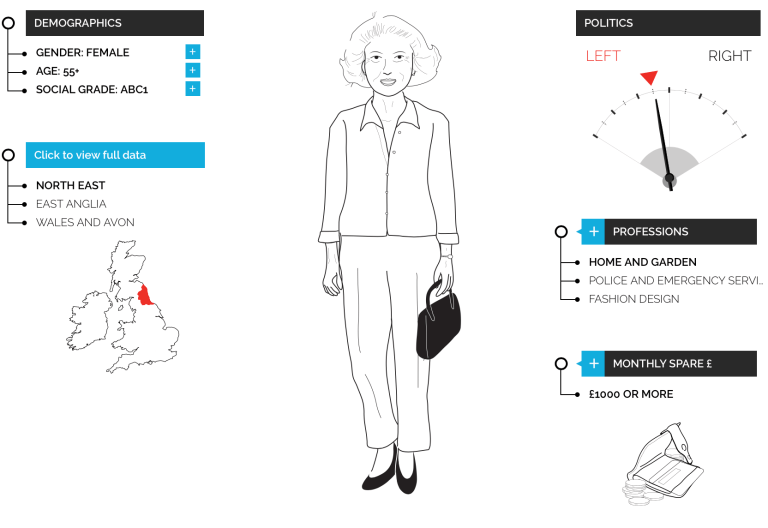
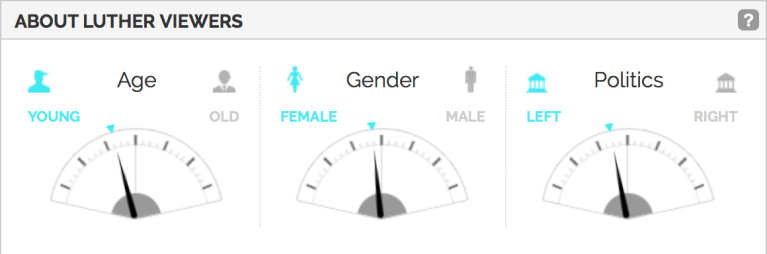
The Type of People That Watch Luther
Critic Feedback
Viewer Feedback

Crazy, unhinged, but great show
Fantastic action-packed police drama.
I have watched countless TV shows from the US and the UK and this is by far one of the better written shows. It is not fully packed of twists and turns but the actor who plays ‘Alice’ is pure evil genius. She alone takes the show from being ‘just good’ to fantastic! Overall it is worth watching and much better than any other police show I have found in recent years, with a possible exception of ‘Dexter’ (US TV show).
Without giving too much away it is a story about a ‘troubled’ police officer who is highly skilled at his job, however has to deal with many issues. Throughout the show he comes across as very self-contained with a few outbursts of anger; these highlight his frustrations of the harsh situations for which he has been placed.
Okay, it’s been a while since i actually saw a series I liked so much. England doesn’t churn out amazing movies or TV programmes by the dozen, but when they get ’em right, they get ’em perfect. And Luther is one of those gems.
A very gritty setting, and perfect execution for a detective series. Each character is very detailed and constantly evolving and growing with Idris Elba playing DCI Luther, constantly fighting his own deamons and a rich cast of characters who make his life ‘interesting’.
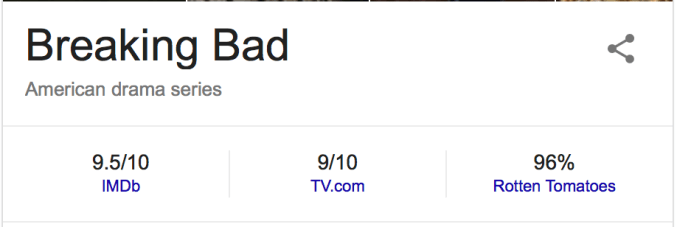
Breaking Bad
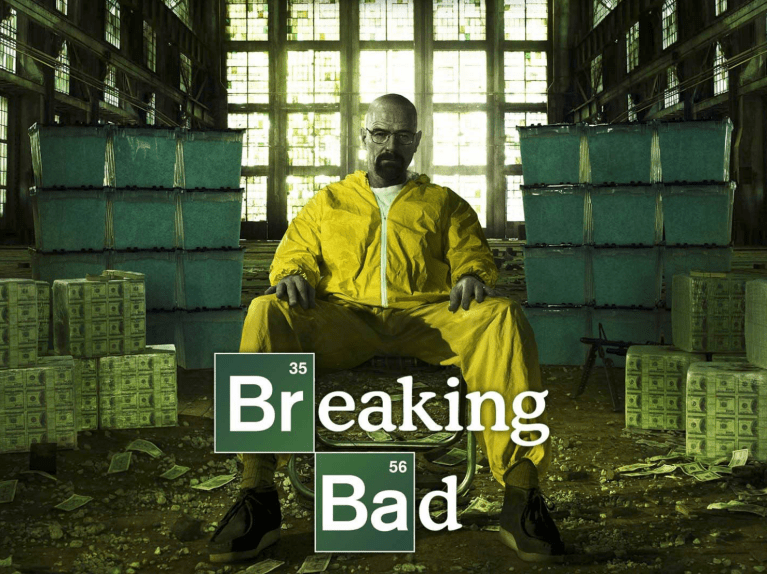
Breaking Bad roughly got 6.4 million viewers with mixed reviews but mainly positive from critics and audiences. One of the things that makes series so popular due to it introducing a sympathetic main character who slowly becomes increasingly diabolical, greedy, self centered, and cruel. The show has some factors that resemble Luther when it comes down character conflict as the main character deals with cancer, a decaying marriage as well as a partner conflict, Walt and Jesse have a love-hate relationship as the older teacher easily and often gets agitated and frustrated with the younger, inexperienced chemistry flunk. This has become a common sight in American crime dramas where two characters come together inconveniently that tend to be opposites of each other. However as the series progresses, the viewers see the two develop a sort of father-son bond, with Walt becoming much closer to Jesse than his actual son, Walt Jr. (He once accidentally refers to his own son accidentally as Jesse.) Jesse becomes very protective of his former teacher when others threaten his life. Things about Breaking Bad that differentiates it from Luther is the fact that it sometimes contains more light hearted and humorous scenes, whereas British are dark with little to no humor. It also gives off a more innocent feeling through it use of bright lighting, and more colourful costumes.
Opening Scene
Breaking Bad starts by creating a different tone then British Crime Dramas, it is presented in a more light hearted and not as serious way. Like Luther this starts really fast paced as it is a chase scene however unlike Luther the lighting is very bright compared to the darkness of Luther. As well as that Breaking Bad uses a lot natural light from the sun as this opening is shot outside, it uses an orange and teal style effect to really brighten up the shot giving off again a more laid back and more comedic feeling. The cinematography is great and is really well done using a variety of establishing shots and wide shots from many different angles to help increase tension of the scene. The location is an isolated desert and the main focus of the opening which could suggest how Walter White is feeling. The opening features a lot of a brighter style lighting which the cinematography takes advantage of with the establishing shot giving the viewer a false sense that everything is okay in that sense the opening is very different to Luther as it makes the episode look more like a film and not a crime drama.
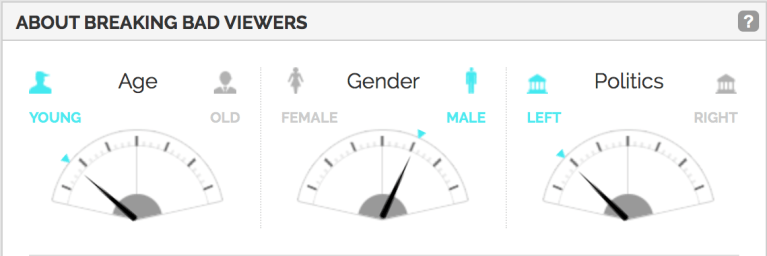
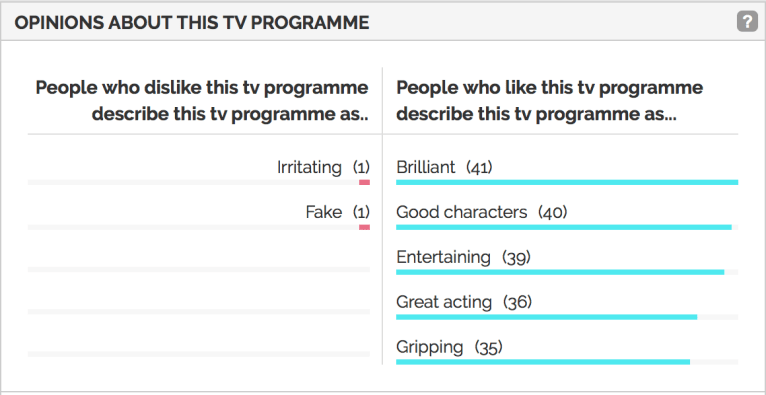
The Type of People That Watch Breaking Bad

Critic Feedback
Viewer Feedback
Brilliant Character Work In Pitch Black Comedy-Drama
The age of Bryan Cranston has returned. Once universally lauded for his work in Malcolm In The Middle, there had yet to be a good vehicle for this man’s particular talents. He has that rare gift of generating sympathy and manic-energy at the same time.
For those that would be content to label this show a Weeds knock-off, bear in mind that Breaking Bad is a new kind of monster. It touches on the very same themes, “living realistically as a middle class in the United States” which often makes us resort to extremes to survive. Like the mother and daughter team that robbed that bank. But the weed selling antics of Showtime’s hit show is really nothing like “Bad.” The Pilot was about as perfect a Pilot as I’ve ever seen, and much of it rests on Bryan Cranston’s shoulders.
opngate11 March 2009
I have to echo another reviewer on here and say that as of the past many years I have not watched television, save PBS, Discovery, or History channel. And the news, of course. There has been nothing except The Sopranos and Family Guy in the realm of series that warranted my attention. Almost everything out there is stupid drivel that insults the intelligence of educated human beings.
Vox Pop
Evaluation
Primary Research – is new research, carried out to answer specific issues or questions. It can involve questionnaires, surveys or interviews with individuals or small groups.
Secondary Research – makes use of information previously researched for other purposes and publicly available.
Quantitive Research – is a structured way of collecting and analyzing data obtained from different sources. Quantitative research involves the use of computational, statistical, and mathematical tools to derive results.
Qualitative Research – is primarily exploratory research. It is used to gain an understanding of underlying reasons, opinions, and motivations. It provides insights into the problem or helps to develop ideas or hypotheses for potential quantitative research.
Primary research was the most useful to me as I were able to get the opinions of the general public about how they felt about crime dramas and there favourite ones and why. Many of the people we interviewed were very happy to take part and provide interesting and well thought out answers which helped me get a better understanding of how viewers felt about crime dramas overall. Secondary research also proved to be useful during this task as it told us the opinions of many critics on what they thought about crime dramas. It also helped due to it giving very long and in depth answers that made it easier to pick out certain aspects that made them feel like it was a successful show. Secondary research also made collecting data easier when looking at a collective of people for example when finding out what types of people enjoyed Luther gov.lite had already tallied up the results and put them on there website, saving us from having to put everyone we interviewed into categories and finding the results that way. Quantitive was useful when displaying data in charts and showing clearly who watched crime dramas how old there were and where they lived giving me an general oversight into the different types of people that like different shows. Qualitative research was the least useful and difficult, it was hard for me as I couldn’t find any reliable online sources and then when I did find some it was unclear and varied in answers, so I ended up not using it. However when interviewing pedestrians in the Vox pop we were able to find the reasons on why they watched crime dramas as well as they opinions.
Brief Part 2
Write a glossary explaining the following single camera drama techniques.
Conduct test shots using single camera drama techniques – upload these shots and provide a brief evaluation exploring how you have explored these key techniques.
Signal Crime Drama Techniques, Layered Audio and Manual Camera Setting:
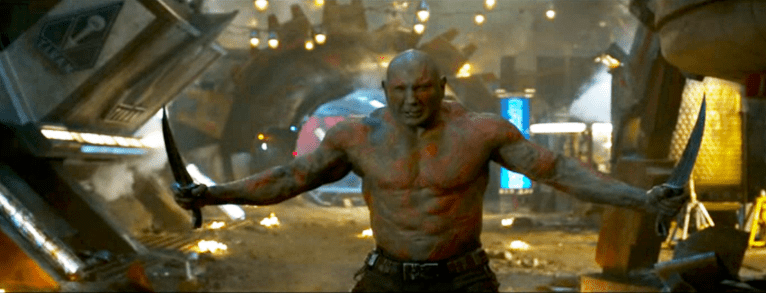
- Mid-shot – never cut character off at a joint, head space – a good example of this is the Gardenias of the Galaxy as the mid-shot is used to show his emotion through his body language and his facial expression as well. This scene depict this character as angry and ready to attack as it shows him with his knives drawn and hateful face.
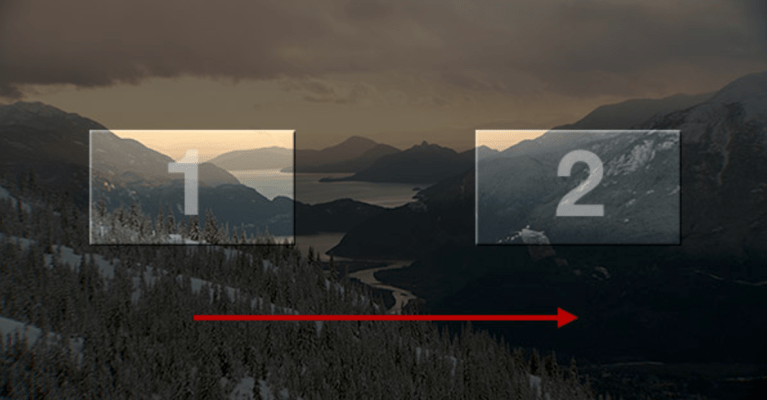
- Panning shot – where the camera moves from one side of the scene to another – the opening scene in Rear Window has used a panning shot really well as it sets the scene whilst following a character whilst he moves through the scene.
- Establishing shot – a shot that sets the scene – an effective establishing shot is used in Star Wars: The Force Awakens uses a extreme-long shot at the beginning of the scene indicating where and when the scene in the setting.

- Extreme close up – where a character face or body part takes up most of the screen – Once Upon a Time in the West there is a great extreme close up scene that is as full of tension as it can be, and the unspoken conflict between the two characters is unfolded simply through their eyes and their harsh faces.
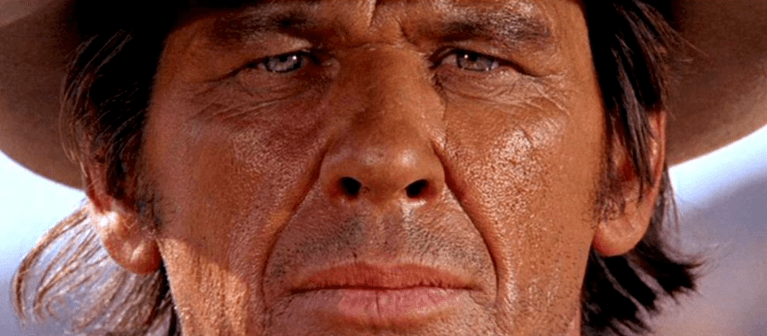
- Wide shot – head space and foot space, cant touch the edge of the screen – Django Unchained is an example os good because shows the entire object or human figure and is usually providing context letting you know where its taking place.

- Over the should shot – character in foreground is out of focus or something taken from the perspective or camera angle from the shoulder of another person – Sherlock does this really well cause it uses it to make a normal conversation very interesting and build the tension in the scene.
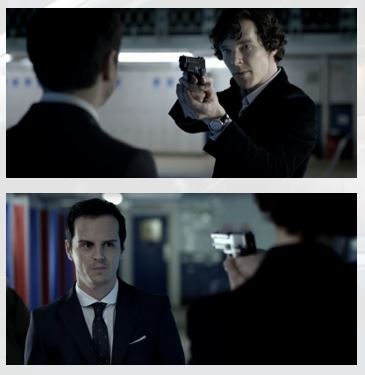
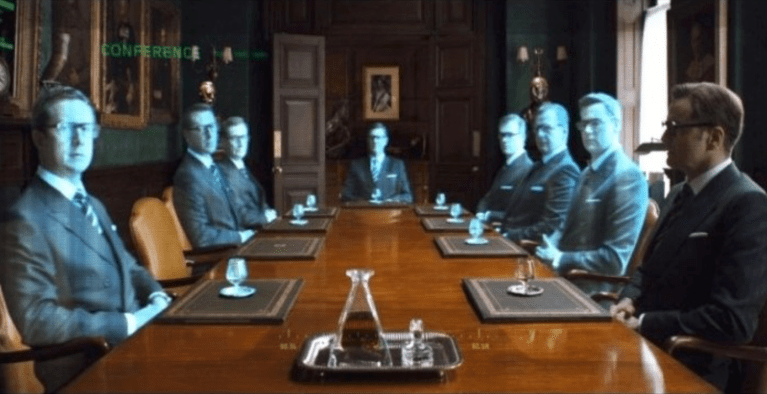
- Master shot – keep all characters in view – Kingsman does a good Master shot as it keeps all the characters in shot as the talk as well as contextualising the scene.
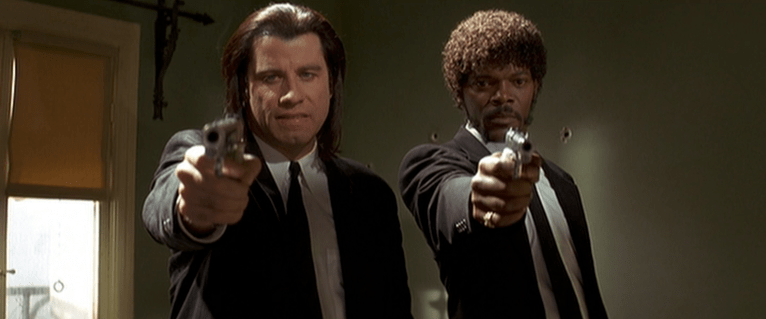
- Singles/Two shot/Three shot – A single is a shot with one character. A two shoot feature two charterers on screen, a three shot is with three. The position of the actors does not matter as a long as we can see both of them – Pulp Fiction is full of great Single, Two and Three shots used to establish the relationships and themes of the scene.
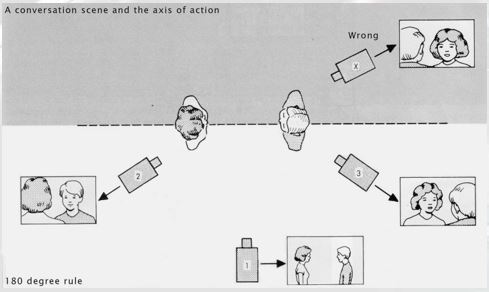
- 180 Degree Line – is a basic guideline regarding the on-screen spatial relationship between a character and another character or object within a scene. By keeping the camera on one side of an imaginary axis between two characters, the first character is always frame right of the second character. Moving the camera over the axis is called jumping the line or crossing the line breaking the 180-degree rule by shooting on all sides is known as shooting in the round.The 180-degree rule enables the audience to visually connect with unseen movement happening around and behind the immediate subject and is particularly important in the narration of battle scenes. – a great example for a 180 degree rule is the Dark Knight when Batman interrogated the Joker the line is never broken throughout the scene making it more natural viewing.
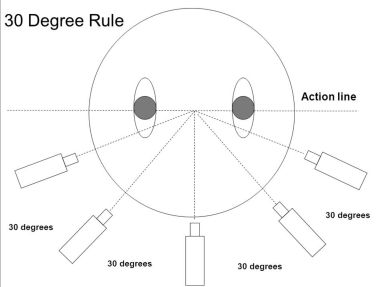
- 30 Degree Rule – the camera moves 30 degree around the subject on the 180 degree rule – as previously said the Dark Knight pairs together the perfect use of 180 degree rule and 30 degree rule effectively using it to break up conversation and action in a seamless way that feels fluid.
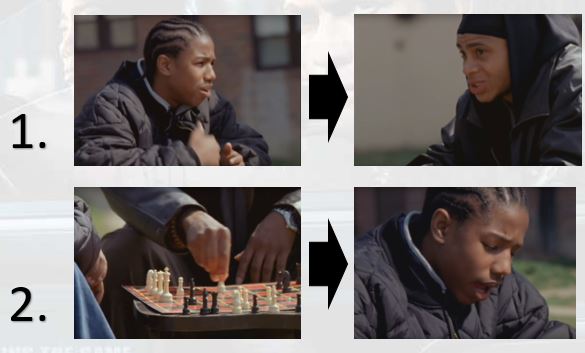
- Eye line match – the camera shows the character looking at something then cuts to what there looking at – this shot is also used to mix up dialogue shots as well as contextualising scenes I believe that the wire does these shots very successfully to make there episodes more interesting.
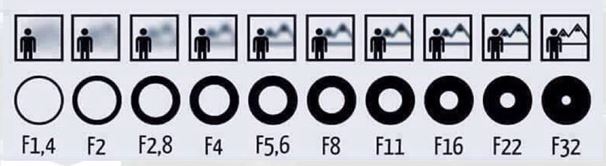
- Depth of focus – want a shallow depth of focus lower depth of focus (mid or close shot) higher f stop (master shot)
- Focal length – the shorter the focal length the more distanced your subject becomes from the background, however it also warps the image 50mm is roughly what the human eye sees (recommended 32mm – 50mm)
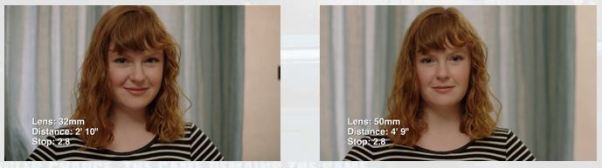
- Eye Scan – editing two shots together that are too dissimilar means that your eyes have to readjust in an unnatural manner. If edited correctly the audience shouldn’t even notice the changes. – a good example of eye scan is dragnet it may be simple but is very effective of keeping eye scan so dialogue scenes feel natural to watch and are easy to follow.


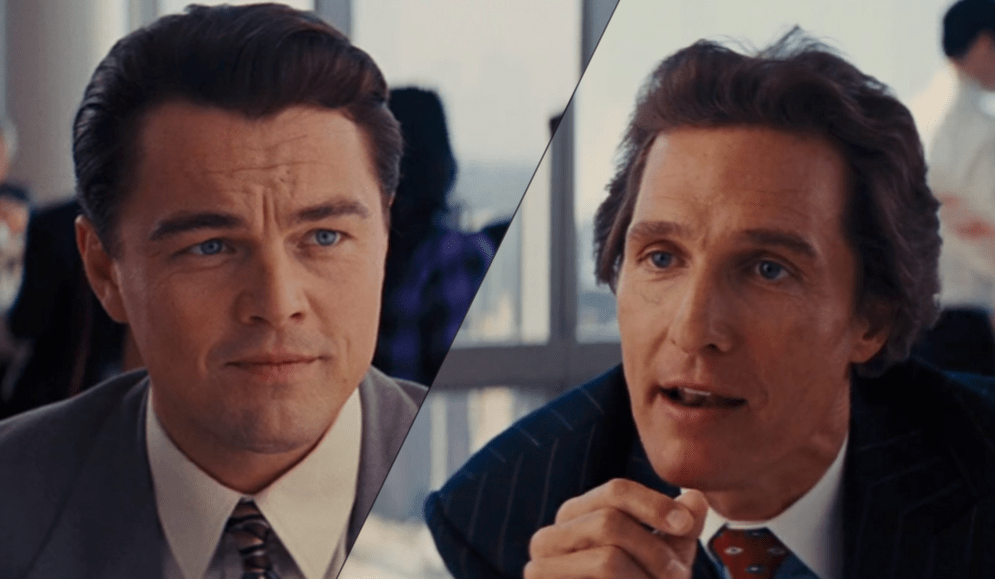
- Reverse Shot – Shot reverse shot is a film technique where one character is shown looking at another character, and then the other character is shown looking back at the first character. Since the characters are shown facing in opposite directions, the viewer assumes that they are looking at each other. – an amazing example of a reverse shot is the lunch scene from Wolf of Wall Street, it creates the perfect mood for the comical events that take place.
- Continuity Editing – in film and video creation or different components cut from a single shot making sure the consistency of story stays the same across the scene for example in this scene how much the sandwich has been eaten.

Tests Shots
In these two clips we explored different types single camera techniques that we could then later use in the final edit. We used a script given to us and tried to create are own version of it through the single camera techniques. In the first clip we practiced with no script just so we could understand what different shots we needed to film and how we would film them. In the second we followed a short script with rough story-bored. We made a couple mistakes such characters being out focus in the over the shoulder shots, as well as that most of are shots were incorrectly framed therefore making it unnatural for the eye to view. However from are mistakes we improved on them massively by incorporating single camera techniques that was correctly used into are crime drama Cryptic. In are crime drama we used all of the shots used in the second test shots however we edited upon them by taking extra time in making we had the characters lined up properly with the camera and focus it to make the scene look more professional. I feel like we learned from are mistakes are improved on them to make Cryptic as best as I could.
Brief 3
Ideas Development
Actor 1, victim – N/A
Actor 2, killer – Silas
Actor 3, detective – Henderson
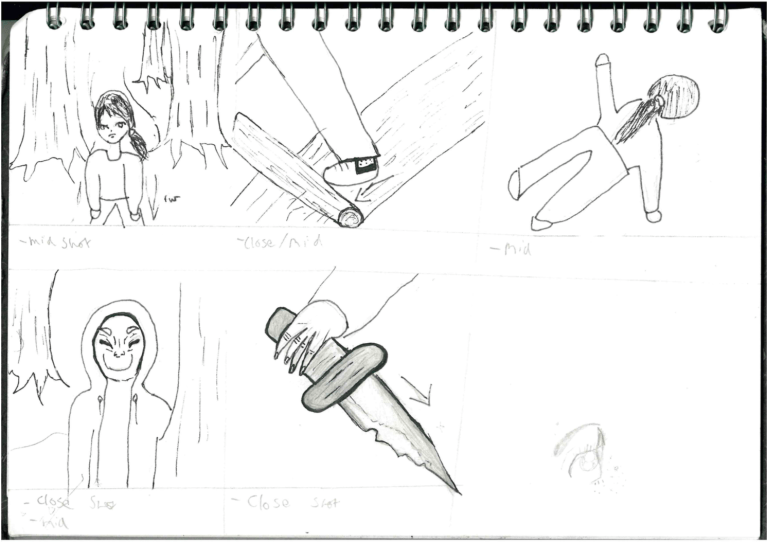
Starts off with actor 1 being chased through the woods with a flashlight, camera follows them. Actor 1 is constantly looking behind them with a look of terror on there face, as Actor 1 looks behind them for the third time they trip of a root. Camera cuts to a wide shot of Actor 1 with a low angle as if its a 1st person pov of Actor 2 with a tree taking up a third of the image, Actor 2 places his hand on the tree and the camera moves closer to Actor 1. Cut to Actor 1 trying to get up they look up to see Actor 2 approaching and screams. Low angle close up of Actors 2 face as he laughs hysterically “You think you can escape” he shouts barely containing his laughter, in a high pitched voice. Actor 1 tries to get away but Actor 2 pins them to the floor pulling out a knife and running it along Actor 1 face. Actor 2 “shh shh don’t scream don’t scream or I’ll talk your tongue out”. Actor 1 “please please I have a family don’t do this” his voice shaking.
Crime Drama : Cryptic
Idea
Episode starts with the main protagonist, Jason Banks (Detective) receiving a phone call in his office about a crime which happens the night before. The crime is at around midnight and it is a murder where a woman was on a run and then is stalked by a killer wearing a mask, she is stabbed to death after she trips over and falls on the floor. Detective arrives at the crime scene where the body is located. This crime drama is a serial crime drama which follows the crimes of the main antagonist, each crime adding clues for the detective to solve which ultimately at the end of the serial gets the killer caught and his murders seized.
Roles
Charlie Guy-Wilson – Script Writer | Director |Visual Editor
Willow Chamming’s – Storyboard Writer |Support Team | Title Sequence
Aaron Briggs – Producer | Camera | Title Sequence
Elijah – Pre-Production Team | Audio | Audio Editor
Storyboard
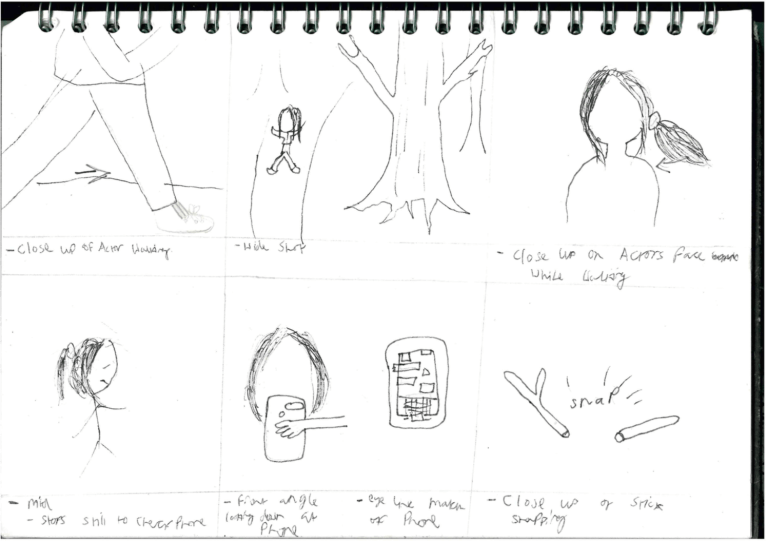
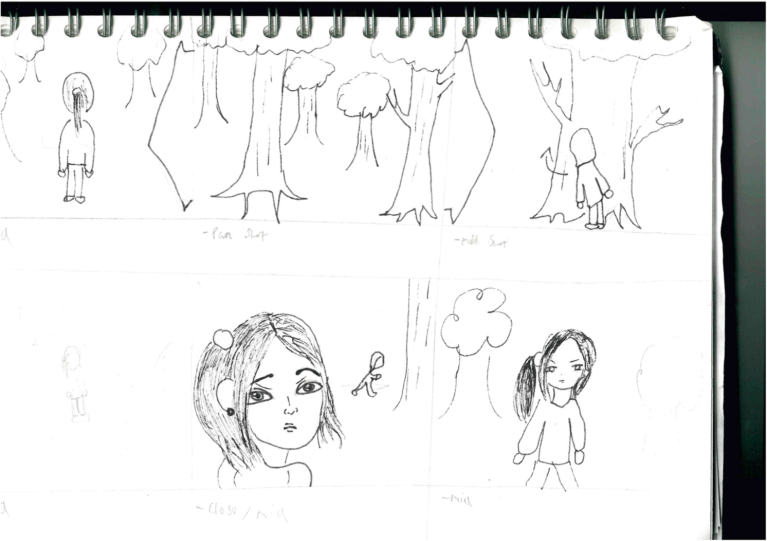
Risk Assessment
| Course | UAL MEDIA LEVEL 3 |
| Unit or Project | CRIME DRAMA |
| Name of Project | CRYPTIC |
| Date of period this risk assessment covers | 29TH OCTOBER – 9TH NOVEMBER |
| Producer name | Name: AARON BRIGGS Tel: n/a |
| Location address and contact number | ABBEY FORD WOODS
Tel/mobile/pager |
| Tick the hazards identified and refer to the industry standard rules and guidelines (these can be found on the BBC website)
If you are filming a high risk activity (those marked with a *) please refer to subject teacher and college policy on safety and approved contractors. |
| Hazards | Hazards | Hazards | |||
| Aircraft * | Hire of lighting equipment | x | Electricity or gas* | ||
| Armourers * | Scaffolds * | Fire/ flammable material* | |||
| Costume make up vehicle | Smoke effects | Fight sequence | x | ||
| Driving operations | Stunts * | x | Glass * | ||
| Explosive PT fireworks * | Access/ egress | Hazardous substance * | |||
| Hydraulic hoists * | Audience public | Heat/ Cold | |||
| Lasers | Comms Failure | Inexperienced performers | |||
| Location catering | Confined spaces | Lifting | |||
| Machinery | Manual Handling | Excavations/caves * | |||
| Noise * | Person with special needs | Physical exertion | |||
| Water * | Weather | x | Working at heights * | ||
| Speed * | Vehicles/ off-road driving * | Violence public disorder * | |||
| Location lighting * | Derelict building/ structure * | Lone working |
| List of experts engaged:
n/a |
| Details of activity:
Filming scene 1, where actor is running through woods then falls over branch and gets killed by the “killer” Filming scene 2, which is a simple dialogue scene between 2 actors in the woods again where the crime has happened. |
HAZARDS LISTED ABOVE AND THE WAYS TO PREVENT:
Hire of lighting equipment:
We will be placing far away from scene in the background so nobody can trip and also LEDs so no wire hazards.
Stunts:
Make sure that the actor is comfortable and can do the stunt without harming themselves. (The stunt is tripping over a branch and falling on the ground however won’t be filmed in one take so doesn’t need to be done in full.)
Fight sequence:
Can shoot reverse shots so that the actors are not harmed and also no contact needs to be made as camera angles can cover up but there is still the risk of contact being made. The sequence however, is only simple with the killer being pushed away.
Weather:
If rains then equipment is at risk and then ground will become muddy and so can be a hazard to actors and crew.
| Name of the producer:
Indicate safety training: |
Print name: AARON BRIGGS
Signature: – |
| Name of authorizing Lecturer:
Indicate safety training: |
Print name: EMILY FRANKE
Signature: – |
Script
EXT. scene 1 woods
VICTIM jogging through woods listening to music, reaches and pauses to catch breathe. Looks down at phone and texts on way home to ‘Mum’. Starts walking home, thinks she hears foot steps behind hear her so she stops and looks behind her sees nothing and continues walking. Hears it again she pauses again.
VICTIM
“Hello…”
She looks around panicking.
VICTIM
“Is anyone out there”
Silas emerges from the tree line revealing his knife. VICTIM’s eyes widen as she turns to run. As running she looks behind to see if anyone’s there, she trips over a root and falls to the floor.
VICTIM
“ahhhhhhhh,HELPPPPPPPPP”
Silas runs to VICTIM a she’s on the floor.
Silas
“shhh shhh don’t scream, don’t scream”
Silas runs knife along VICTIMS face.
Silas
“I just get so mad when people scream, you wouldn’t want to upset me now, would you?”
VICTIM kicks Silas back.
Silas
“Arghh”
VICTIM starts to crawl away. Silas pulls VICTIM towards him by the ankle.
Silas
“Now you’ve really made me mad”
Victim
“Nooo Plea-“
VICTIM is cut short by Silas stabbing her in the head. VICTIM falls to the floor eyes wide open.
INT. scene 2 office
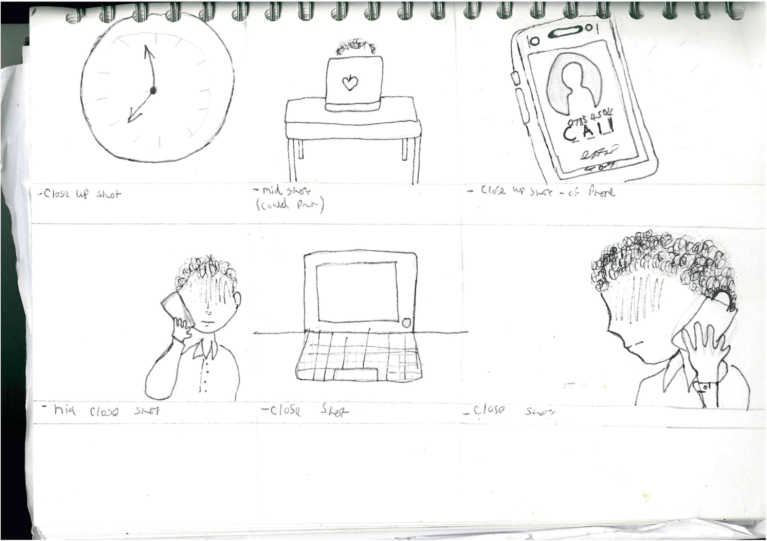
Jason Banks Sat at his desk doing typing up an old case regarding same killer on Mac, gets phone call and answers it.
Jason Banks
“DCI Jason Banks speaking”
Tim Henderson
“Jason its Tim theirs been another Silas killing”
Jason Banks
“Again? Where this time?”
Tim Henderson
“I’m sending you the location now”
Jason gets a message and opens it on laptop, showing Abbeyford Woods.
Jason Banks
“Okay I’m on my way”
EXT. Scene 3 woods
Jason Banks
(Option 1) pulls up to crime scene
(Option 2) walk’s to the crime scene
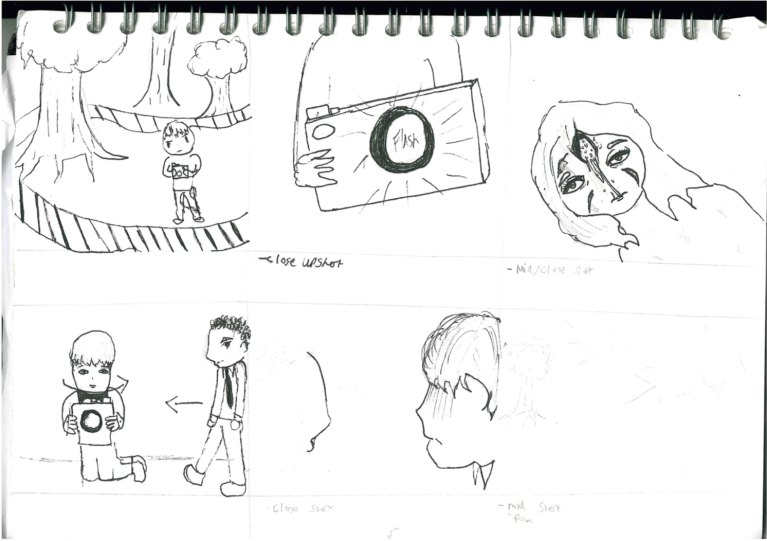
Walks up to forensics. Tim is taking photos of the body, looks up to see Jason Banks walking up to him, he gets up and walks towards him.
Jason Banks
“Tim, you just spoke to me over phone, whats the statues report”
Tim Henderson
“Yesterday, 17 year old girl named Emily was on a late jog when she was attacked by what we think is Silas, she has been inflicted by multiple stab wounds to the head and neck, she fell over a log and has shown signs of struggle.”
Jason Banks puts on gloves and crouches down to examine the body more closely.
Jason Banks
“How can we be sure it was Silas?”
Tim Henderson points at a tree, Jason Banks turns to look at the tree with Silas’s name engraved into it.
TITLE SEQUENCES


RECCE:
WOODS SCENE


OFFICE SCENE
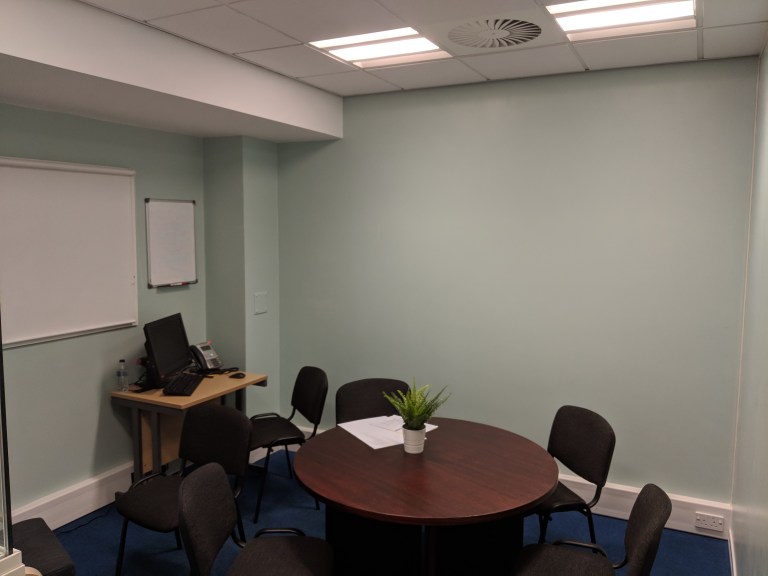
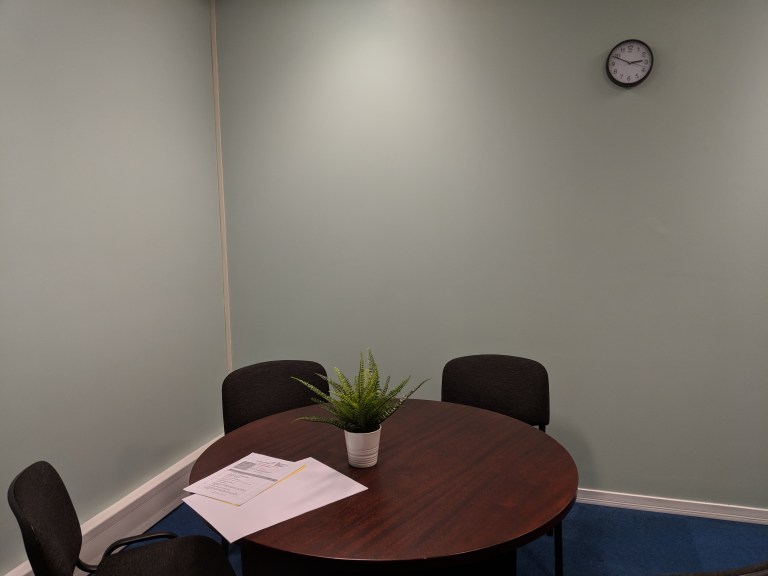
Scene 1 & 3 – Woods
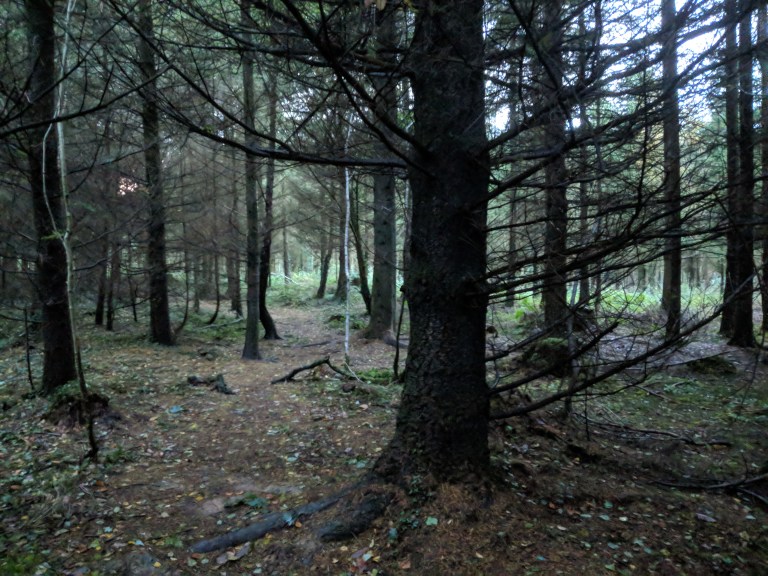
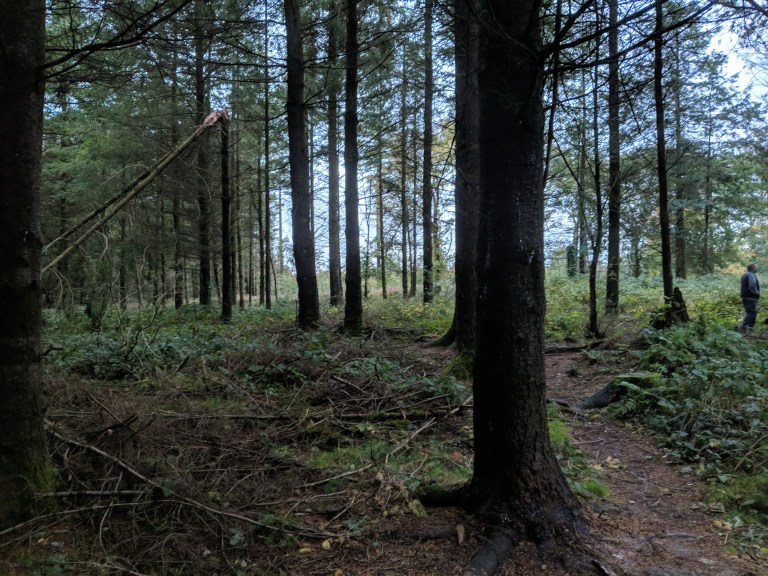
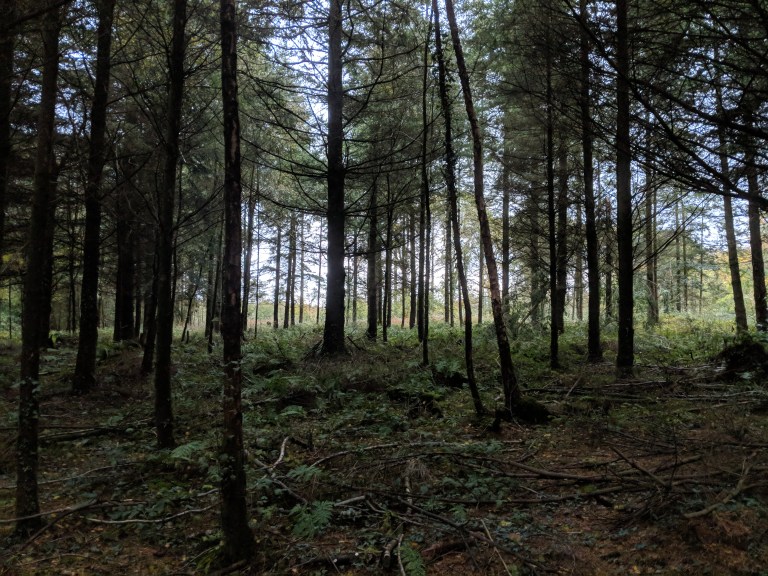
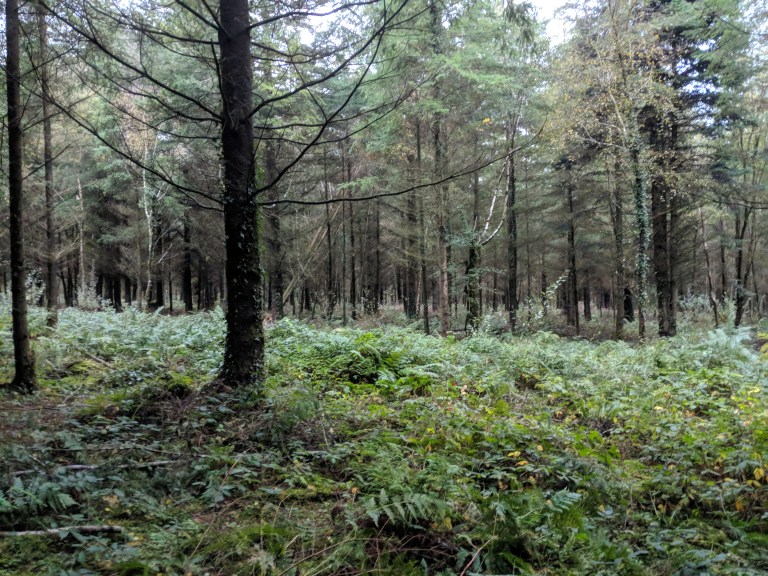
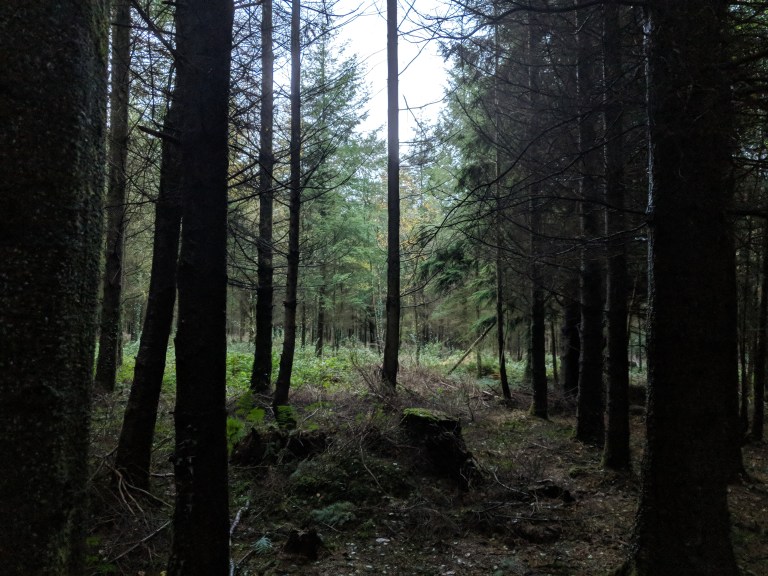
These above are photos taken on Recce at the location, Abbey ford Woods.
Production Recce: CRYPTIC
MEMBERS PRESENT DURING RECCE:
Aaron Briggs
LOCATION
Where is the set located?
Abbeyford woods in Okehampton Devon.
ACCESS TO LOCATION:
How do you get to the location you are filming? Can you get there easily?
The access to location isn’t as easy to get to as it is based in Okehampton which is a bit of a drive from Exeter. The location is a woods and would need to be driven to due to kit as a walk out from Okehampton, the wood’s carpark is a 5 – 10 minute drive from Okehampton as on the perimeter of Okehampton.
POWER:
Does the location have access to power?
As the location is a woods, the location has no access to power which means that kit will have to be charged and lighting will be LED powered.
NOISE:
Is the location too noisy?
The location is actually very quiet with only natural sounds like birds and trees when windy, cars couldn’t be heard although close to the car park.
PERMISSION:
Are you allowed to film there?
The location is open to public use however not entirely sure if strict on filming however the location within the wood is concealed anyways and so wouldn’t be noticed.
SUITABILITY:
Is it suitable for the shoot?
The location is very suitable for the scene as it is a scene which takes place in a wood and this woods fits because it looks isolated and gives the feel that we as a group want from the scene.
INTERIOR OR EXTERIOR:
Will the weather affect the shoot?
This location is located outside which does mean that weather will have to be really taken into consideration when shooting as the scene doesn’t need rain.
Scene 2 – Office
Production Recce: CRYPTIC
MEMBERS PRESENT DURING RECCE:
Aaron Briggs, Charlie Guy-Wilson
LOCATION
Where is the set located?
In Exeter, CCI building, the staff meeting room.
ACCESS TO LOCATION:
How do you get to the location you are filming? Can you get there easily?
This is easily accessible as it is inside the CCI which is where we study.
POWER:
Does the location have access to power?
This location does have access to power because it is a room with mains electricity.
NOISE:
Is the location too noisy?
Again like the first location, this room is fairly quite however using mics, may pick up background noises that I didn’t notice.
PERMISSION:
Are you allowed to film there?
I have to ask a member of staff and make sure the room is booked.
SUITABILITY:
Is it suitable for the shoot?
It is supposed to look like an office so this suits the scene well.
INTERIOR OR EXTERIOR:
Will the weather affect the shoot?
The location is an interior location and so weather doesn’t affect the location.
Production
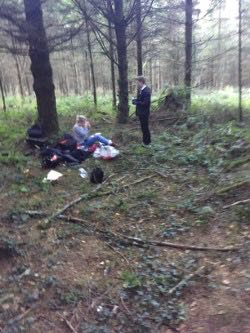
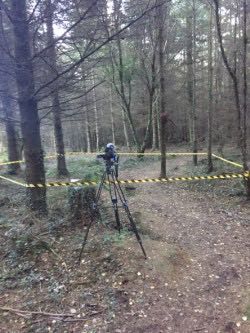
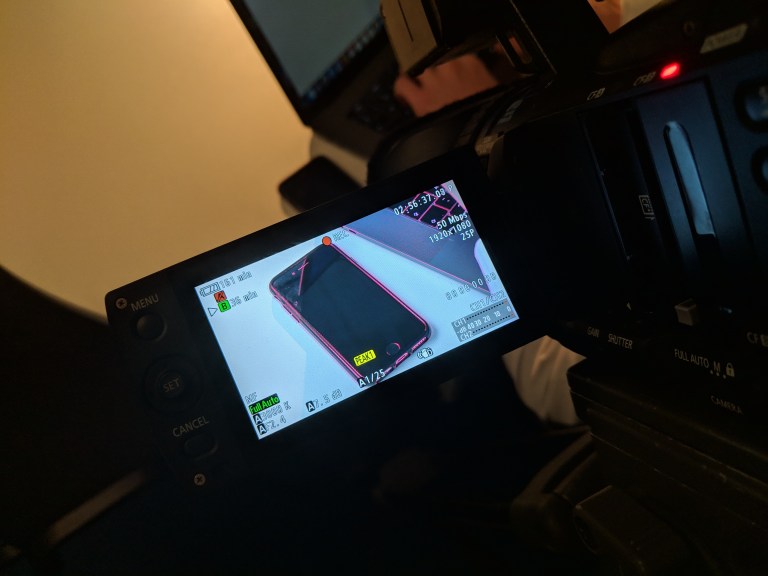
I followed the production schedule that are producer made and filmed on the Monday the 9th in Abbeyford woods Okehampton Devon. I arrived at 2pm to try and catch the right lighting for a shot. The issues I encountered some problems when filming, first of which was are group were a man down so we had to constantly switch roles when I wasn’t on camera acting I was the boom mic operator recording audio. This slowed me down because the group couldn’t move from scene to scene as I had figure out who would be on camera and audio. Another problem that I faced was that we had to build up the crime scene set with setting up police tape, applying make-up and changing outfits it got dark really quickly due us being so deep into the forest. This impacted the colour correction of the footage that was recorded. As director I had I chose to film the crime drama in the same sequence as the story bored to stay on top of what we needed to film and what still needed to be done, this also helped with the continuity. Apart from the previous problems I didn’t encounter anything that made us change the way we filmed, we stayed on target for the time schedule we had given are selves and got everything we needed to film in the woods.
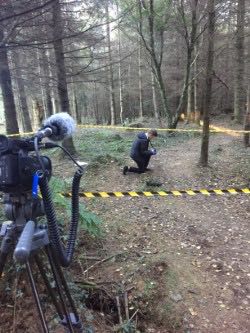
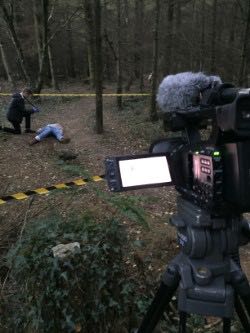
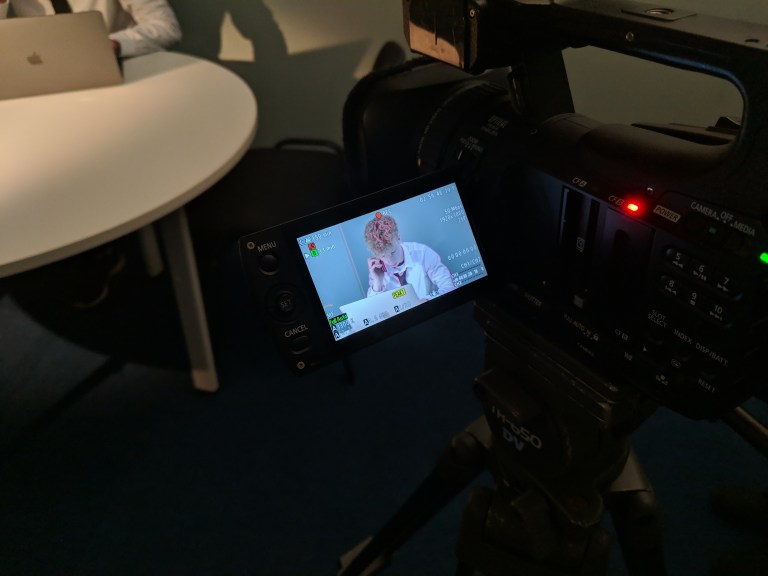
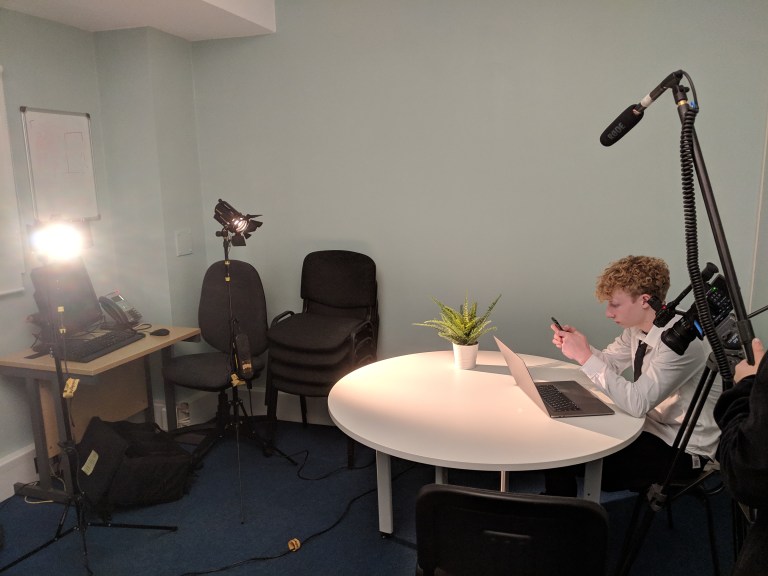
On the second day of filming we filmed in the Exeter College CCI Staff room to get Jason Banks office scene where he finds out about the killing. This scene took a couple of hours to due to the number of retakes that had to be filmed. One of the problems that I faced on the second day of filming was that the lighting was very poor in the staff room so to solve this I hired out three point dado lights so we could create the right mood for are scene. I feel like the second day of filming was a lot more successful then the first as we were a lot more time effective and productive.
Post Production
For the post production I was the editor for are crime drama. As editor I had to assemble all the clips and lines them up them put them into Final Cut and then lay them out to fit the storyboard. I found this very easy as the idea for Cryptic was originally mine so I already had a vision in my head of how I wanted the final product to turn out. Therefore this process didn’t take very long especially since I tried to keep the edit simple as I didn’t want to over edit and make it look tacky. The more difficult things about the edit was the J and L cuts at the end, these were difficult due to the fact that at the time of the edit there wasn’t any audio available as we didn’t realise until after filming that the camera didn’t record any audio resulting in recording audio separately through the Zoom mic and dubbing it on top. This made the J and L cuts harder to do because I didn’t know how long to run that shot before switching to a different angle. Apart from that I didn’t encounter any other issues, I only used fades to and from black as well as cross fades both of which I am comfortable using. Over time I hope to improve upon my editing skills and create more daring and difficult edits however I think the current pass of the edit works well with story of Cryptic. Overall I was pleased with how the final edit turned out and counted it as an success, if I were to go back and edit again I would have spent more time on making sure the contingency stayed the same throughout.
Final Edit
Credit to Emily for suggesting the name Silas.
Brief 2 – Extended Evaluation
Job Roles in the Creative Media Production
I took on the roles of Screenwriter, Director, Boom Mic and Editor in the production of are crime drama.
Screenwriter
Screenwriters provide a blueprint onto which the producer, director, production designer, composer and editor, cast and crew can graft their creative efforts. Screenwriters must be able to write a screenplay in which the reader can see a film unfold cinematically. The screenplay must not only feature fascinating characters, an exciting plot and a great premise for a marketable film but it must conform to the logical principles of dramatic construction, as well as industry format and style. Screenwriters must produce highly creative writing, to strict deadlines, working with the script development team to create a financially viable product.
Ways into working in scripts
There is no direct training needed to be a screenwriter, producers expect screenplays to be written in master shot form and tend not to except them if there not. An English degree would help but it isn’t essential as well as having a media degree. Having good and original idea as well as being creative would be required to create good quality scripts that are picked to become films. A way to get more familiar with scripts and screenplays is to offer to read and write scripts reports for production companies, as well as writing theatres, regional films would help get you into this industry.
Becoming a development executive typically involves progression through script reading and script editing, although many also have prior experience of working in other areas of film and TV production. A number of industry organisations offer courses in screenplay development, including Arista, the EU’s Media Programme and some film schools. The National Film and Television School (NFTS) also offers a script development diploma.
Script editors are usually highly educated graduates, and experienced script readers, with proven analytical skills, who have taken an industry respected script editing course, such as Arista. They may also have attended a number of screenwriting courses, and should have a comprehensive knowledge of the dramatic and screenwriting theories. Script readers typically have a BA or MA degree. One of the best courses is the graduate script reading training course at Script Factory in London or in partnership with regional screen agencies. Script readers should watch many films (especially with screenwriters’ commentaries) and read screenplays, transcripts and theory books. Script readers must submit examples of coverage work to secure employment.
Skills needed to work in film and TV scripts
- a keen understanding of film narrative, and knowledge of current audience tastes and future trends
- a passion for cinema and film making
- an understanding of their organisation’s specific development needs.
- ability to search out new talent and cultivate creative relationships
- excellent all-round communication skills
- ability to troubleshoot story problems with creativity, discretion and great flexibility
- keen insight into all aspects of screenplay tone, genre, style, structure, character, plot, action and dialogue
- an understanding of the various development stages, including: log lines, premises, synopses, beat outlines, step-outlines, treatments and rough drafts
- a keen understanding of how to use the dramatist’s tools, including comic irony, suspense, mystery and dramatic tension, and of the different ways that screen works affect audience
- knowledge of the production company’s requirements and the current market/trends for films
- shrewd interpersonal and negotiation skills, liaising effectively
- familiarity with screenplay format and layout, and with the required contents of a reader’s report
- an understanding of the art of the synopsis and the screenplay development process
- awareness of developments in the arts and culture, with particular regard to new works in film, fiction and poetry
Summary
Screenwriters have to make creative writing pieces to strict deadlines. They work with a script development team to create a finished script. Sometimes producers bring in an additional Screenwriter to improve certain aspects of the screenplay.
A good way to get into script / screenplay writing is having a English and Media degree though these aren’t a requirement it helps when applying for jobs. It helps to volunteer for reading scripts for production companies as well as writing for theatre and regional film, these would help get contacts and familiarising with scripts.
Skills that make a successful script writer are understanding of film narrative, and knowledge of audience tastes and trends, and having a creative mind set to come up with original ideas.
Director
Directors should understand the significance of scenes and how they fit into the overall structure, as well as knowing what is happening in each scene as it is shot. Directors may suggest changes to the structure or order of scenes in order to create greater dramatic tension. The director’s version of the shooting script which is the blueprint from which all crew members work. Directors are responsible for both creative and technical aspects, working to the projects budget, blocking all aspects of the script in order to keep the production under control, and creating a safe and creative environment for actors to work. Directors must be able to absorb a lot of information while following agreed schedules and simultaneously monitoring performances and technical quality. Directors may be employed by broadcasters or film production companies, or work on a freelance basis.
Ways to become a director
Although no specific educational or training qualifications are required for the role of director, a degree in a media-related, drama or specialist subject may provide some useful background information. Wide experience in and knowledge of the production process is essential. Successful completion of specialist training or courses in single and multi-camera directing is often required.
Directors may have started their careers as researchers, becoming script editors, story editors and ultimately directors or producers. Alternatively, they may have worked as runners, second assistants, first assistants or production managers before becoming directors. A lot of television and film directors have come from a theatre background. They may also start their careers in technical roles like camera or editing.
Skills needed to be a director
- ability to conceptualise ideas and to think visually
- ability to develop a clear sense of style for the production
- precise attention to detail
- methodical approach to work within a high stress environment
- knowledge of the entire production process
- excellent verbal and written communication skills
- ability to lead and to motivate actors and crew
- initiative and problem-solving
- ability to see the broader picture
- diplomacy and sensitivity when working with writers, producers, actors, and crew members
- knowledge of health and safety legislation and procedures
Summary
Film directors visualise and translate scripts into film they also control the production and make sure everything sticks to the deadlines. They also have a key role in picking cast members and production members.
To become a Director it helps to have a degree in Media and Drama but like rest it isn’t required. Courses in multi-camera directing are required. Most directors start there careers as a runner and then work there way up to assistant director or assistant producer until they have enough knowledge and skill to become them.
Skills need to become a director is a large amount of knowledge and experience in production, the ability to problem solve and work in a high stress environment. As well as having great communication skills and being able to visualise.
Boom Mic
Boom operators are responsible for operating booms as well as placing radio or clip microphones to capture the best quality dialogue and sound effects. They must carefully note all planned camera movements and lighting requirements to make sure the microphone is always hidden from the shot. A boom microphone is either hand-held on a long arm or dolly-mounted.
Ways into the sound department
Although there are no formal entry requirements for sound crew, courses are available throughout the UK including specialised short courses, City & Guilds qualifications, BTEC National Certificates and Diplomas, foundation degrees and first degrees, and postgraduate degrees and diplomas.
Short courses are available at a number of institutions, including the National Film and Television School and BBC Training and Development.
Many start their careers working in facilities houses, where they learn about sound equipment, subsequently progressing to working as sound trainees on the floor. As their work affects many other departments, learning about on-set protocol is crucial for all sound crew members, and this knowledge can only be acquired by experience.
Experience may be gained by working on commercials, short films and television productions. Once individuals progress to boom operators, they usually work with the same production sound mixers over a number of years, gaining extensive experience, before being offered the opportunity to head up the sound department.
Working with equipment manufacturers or hire companies can also provide the opportunity to learn about sound equipment and to make useful industry contacts.
Skills needed to work in film and TV sound
- good understanding of electronics and sound recording, playback and editing equipment
- excellent aural skills
- good communication skills
- physical stamina, dexterity and agility
- good memory
- diplomacy and tact
- ability to give and to accept direction
- precise attention to detail
- ability to make decisions under pressure
- knowledge of relevant health and safety legislation and procedure
- understanding of the requirements of other departments including camera, rigging, art department, wardrobe, hair and make – up
Summary
Boom operators are responsible for recording audio to get the best quality dialogue and effects whilst remaining out of shot and not casting a shadow that could intervene with the shot. They also help set up a set and help put together everything needed for the audio.
To become a boom operator you need certain qualifications such as City & Guilds qualifications, BTEC National Certificates and Diplomas. Its quite common to start your career in a facility house to gain knowledge and experience as well as working on short films and commercials.
Skills required are a good understanding of the equipment that your using and great aural skills and the ability to communicate with your team effectively, with an attention to detail and a good memory.
Editor
Before filming begins editors work closely with the director to decide how to maximise the potential of a screenplay. On the first day of principal photography (filming) they begin work in the cutting room or edit suite, looking at the days rushes and checking technical standards and the emerging sense of story and performance. They are guided by the notes taken on set by the script supervisor, who will often visit the edit to ensure the paperwork reporting systems are working well. The director will have their favourite takes and edit them together to create scenes. By the time the film wraps they will have spent hours reworking scenes and cutting them together to create a rough assembly. During post-production, the editor and director will work closely to refine the assembly edit into a directors cut, which must be approved by producers, until they achieve picture lock (known as final cut).
Ways into the edit department
Although no specific qualifications are required to work in editing there are some short courses in assistant editing for digital cutting rooms, for example, the National Film and Television School (NFTS) offers industry recognised short courses for all grades, and there are some postgraduate courses available.
Because most-production companies promote within the facility most people enter the edit department as post-production runners and then work their way up through trainee, edit assistant, second assistant, first assistant and eventually become editors. But as the screen industries change, clearly delineated career progression is harder to follow. Second assistants are now only employed on very big budget films so trainees with at least two years experience are likely to progress by working as assistants in television or on low budget films for a considerable period of time before becoming first assistants on feature films.
Because feature film production involves large amounts of money, and the majority of producers prefer to only trust their editing to experienced hands, the progression to becoming an editor can be difficult. However, if editors trust their assistants they may allow them to learn and demonstrate their talents by carrying out the assembly edit of some sections of the film.
Skills required to work in the edit department
- technical aptitude
- knowledge of a variety of computer editing software such as Adobe Premier, Final Cut, Lightworks
- creativity under pressure
- imagination and an understanding of narrative
- excellent communication and interpersonal skills
- developed sense of rhythm and timing in storytelling
- highly developed aesthetic visual awareness
- ability to lead a team
- patience, attention to detail and good organisational skills
- knowledge of health and safety legislation and procedures
Summary
The editor has a lot of work to do during pre production, production and post production. They work with director to make sure they great the best results during production, when in production they will make a rough cut and spend a lot of time re-working and cutting scenes. when the filming comes to an end the editor will work closely with the director to produce a final cut that has to be approved be the producer.
To become an editor you need to complete short courses for digital cutting rooms with schools such as National Film and Television School (NFTS). Most editors start as a post-edit runner then working there way through the ranks. Its difficult to become a editor as assistant editors are only employed on feature films and directors tend to employ editors they trust.
Skills required are a vast knowledge in editing software and computers, as well as being able to work under pressure, excellent communication and interpersonal skills and good organisational skills.
Sources
https://www.screenskills.com/education-training/careers-information/job-profiles/
https://www.glassdoor.co.uk/Salaries/london-director-salary
Comparison
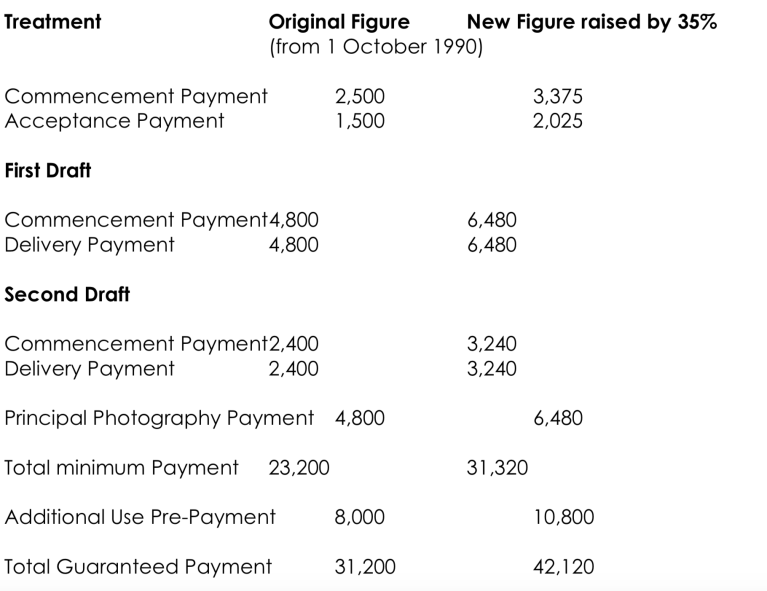
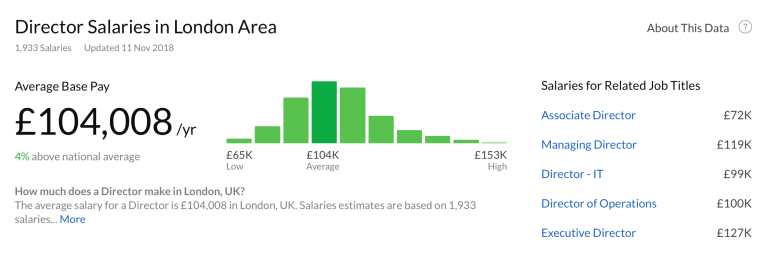
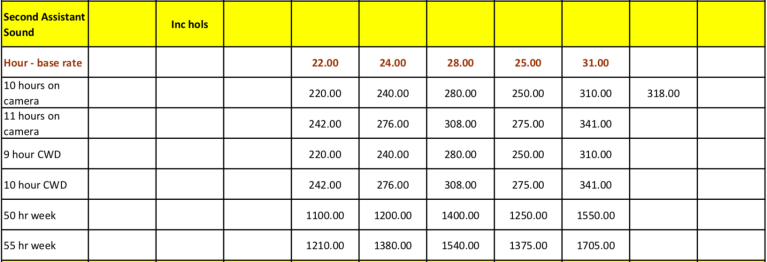
Each of these jobs are very different and require different skills to be successful. As well as that these jobs have different salaries with director being the highest in the roles I had in the production, then the script writer followed by editor then boom mic. All of theses jobs faced there own challenges that varied drastically.
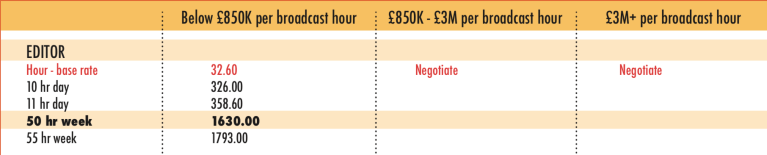
The director had the highest pay of roughly £2,000 a week, this would be a massive insensitive to pick this role as a future job however it is this high due to the fact that it takes many years of climbing up the industry to become a director, as well as that it is a high stress job trying to get everyone on time to meet filming deadlines. Script writer has the second highest pay varying depending on how many drafts are submitted however this job requires a lot of paperwork and office job features that would act as a deterrent to me as I want to be more evolved with the production then post production, regardless of the pay I wouldn’t choose scriptwriter as my job. Third highest paid job is editor at £1,560 per year roughly for lower budget films and up for negotiation for the higher budget or feature films. I have considered the role of editor as a future job however as I previously said I would prefer a job in the actual production of the film. The lowest paid job that I did was boom mic operator of £1,400 per week but still quite high, this job requires lots of experience and contacts in the industry. I wouldn’t mind these job as a way to climb the ladder in the sound industry its also a job that is heavily involved in the production which would appeal to me.
I found that the directors work under a lot of pressure, and many are under constant stress to finish their work on time. Work assignments may be short, ranging from 1 day to a few months. They sometimes must work in unpleasant conditions, such as bad weather. Luckily when we filmed are crime drama the weather was good and we had plenty of time to got all are filmgoing done the only difficult thing when filming was lighting which was uncontrollable for us. Due to scriptwriters and screenplay writers are freelancers this industry is extremely competitive and can cause long stands unemployment causing there to be a lot of stress however once they land a job they wouldn’t have to work for the rest of the year. Most of script writers work from home these means that to be a successful script writer you would need to have discipline and time management in order to be productive. This was a difficult role for me as I kept having writers block and struggled to come up with something that flowed, as well as that I get distracted very easily and would find it hard to focus down and get the work done. Editors have similar working conditions to the scriptwriters although there not freelancers, they usually work in offices or from home as I previously stated this would be a problem for me. I wouldn’t like working in an office as it would be bore me and halt any work progression. Boom operators work as part of a team with the production sound crew, which includes production sound mixers and sound assistants. They must also work very closely with the camera crew. Boom operators often work long and irregular hours they arrive before the start of filming and stay all day. Filming can be during the day or night and at weekends. They work in a studio or on location, indoors or outdoors in different weathers. Boom operators may have to spend long periods away from home I wouldn’t mind this. I also like the fact that the are heavily involved with all the people that are in the production. I personally think that boom operators have a tuff time on set however would fit me the best.
I enjoyed most of roles in the production however I enjoy director and boom operator the most. I think that the director role would suit me due to the fact that they are in-charge of the production they have a lot of control and respect from the other workers. I also like that fact the directors get to create the vision of what the film should look like and how it should be done. The only off putting things of Director is the huge massive work load and high stress environment. Another thing that makes it difficult to become a director it takes a lot of time and experience with many contacts in the industry. I also think that the boom operator would suit me due to there involvement in the production with all aspects of it which would be ideal for me. When we were shooting are crime drama the only thing that I found difficult about the role was the fact that the weather was extremely cold as well as the pole holding the microphone making it harder to hold it.
How to Get Into The Industry
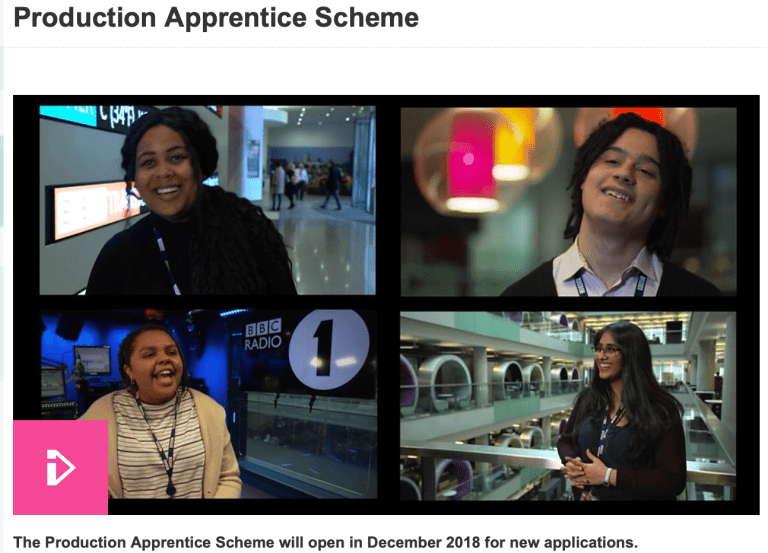
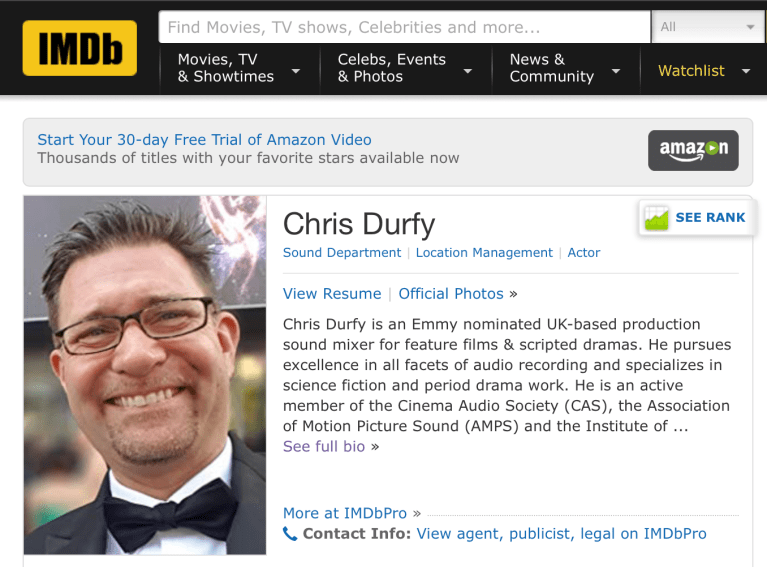
My plan to get into the industry is to apply for the BBC or Sky apprenticeships however due to the fast number of people applying to these there is a slim chance I’ll get in. My second option would be to go to Bristol University and study further film and get a degree. After I that I have a contact in Netflix Chris Durfy a Production sound mixer that’d get some work experience for me, Chris Durfy is an Emmy nominated UK-based production sound mixer for feature films & scripted dramas he is mainly known for creating the theme for Stranger Things and Altered Carbon. He mainly does a lot of audio recording and specialises in science fiction and period drama work. As well as that I have a contact Ben Gale who was an ex-BBC documentary making and now runs his own production company Little Gem Productions who will also give me work experience. Another contact I have is a Second Assistant Director Joe Payne who has worked on famous shows such as Taboo, Luther, Downton Abbey, Call the Midwife and Midsummer Murders and will be happy to get me some work experience. After I get enough knowledge and experience I hope to become a feature film camera man.

Self Evaluation
For the Crime Drama I took on the roles on Scriptwriter, Director, Boom Mic Operator and director. I felt like I was very organised during pre production. During this part of production I had to come up with a storyline as my idea was picked to be turned into the opening scene however I hadn’t gone in depth enough to be able to create an effective script that would coincide with it. Admittedly this took me longer then expected as I kept having writers block and was then finding it challenging to come up with a script that sounded professional and not cliché. Due to this taking up most of the day and still not being finished I decided to go home and spent some more time on it there so nothing would fall behind schedule and we could meet the deadlines. After finishing all of my pre-production I suggested to go props shopping in a local halloween shop for some blood effects and the antagonists clothing so we would be organised and have everything we needed for when production started.
On the production day one I had to arrange transportation to be reliable showing up at the shoots location from the right time to catch the perfect lighting I wanted. Personally I believe that I was an organised director because I made sure that we filmed in order of the storyboard to make the post edit easier. I also made everyone shoot every scene more then once even if it looked perfect, so if there was an issue further down the line such a clip corruption we wouldn’t have to back out and film it again. Although there was one thing I wasn’t prepared for and that was the zoom mic running out of battery as I assumed they were charged by the LRC the same day, so we had to film through the cameras built in microphone. Overall I feel like production was a success as I managed my time and stuck with the storyboard only changing two scenes plus solving any problems that came up.
The organisation of post-production was also great due to the fact that I had taken so many precautions during filming to put the risk of any thing going wrong to a minimal. Editing was pretty easy and straightforward as I just followed the storyboard and added some simple transitions and cuts such as a cut to and from black. Once editing I realised that the camera hadn’t recorded any audio for the final scene, so we recorded it separately and decided to dub it over. I thought this would be hard for someone to dub over clips with no audio at all as it was difficult to figure out what words were being said so I set up the ending clips for a J and L cut so they audio editor didn’t have to worry about lip syncing.
Due to sticking to the production schedule and staying organised all the deadlines were met and the crime drama was finished with a week till the final deadline giving me time to work on my blog and evaluate what happened on production.
I showed professionalism through my use of mis-en-scene by making sure that the killer had a appropriate stereotypical outfit so viewers would instantly know that he was the villain of the show, as well as the detective outfit finding a suit to make him look authentic. I also think I showed professionalism through the scene creating and searching for shops that would sell police tape to create a realistic feeling.
My producer Aaron Briggs has reviewed the work I did and worked closely to make sure everything got done and agreed that if this were a professional crime drama I would have been paid.
Part Two – Evaluate Your Finished Crime Drama
The Narrative involves film or text that tells a story by recounting real or fictitious events its mainly about story telling and not too much about description, it refers to the codes and conventions that are used to organise a story.
Different theories:
- Todorov’s Equilibrium
- Propp’s character type
- Strauss’ Binary opposites- Good versus evil
- Barthes action and enigma codes- clues in the narrative.
Narrative vs Plots
Story is the sequence of events, the order in which the narrative occurs the tour through the building. Plot is the sum of the events, told not necessarily in any special order, but generally consistent with the story and often considered synonymous with the narrative the building itself.
Linear – the story line is in chronological order with a clear beginning, middle and end usual involving a problem and the protagonist starts a quest to solve it.
Non linear – storyline doesn’t follow a chronological order
Narrative
My crime drams opens up to a linear start with a killing taking place and then a detective shows up and try’s to figure out what happened. The opening is linear because it is split into three segments the beginning when the murder takes place in the forest, the middle when the detective gets a call from his office to investigate and then the end when he shows up at the crime scene. Lots of BBC openings to crime dramas follow this linear style of storytelling for example Luther and Sherlock both have scenes that place out very similarly to Cryptic. However are group didn’t plan for the rest of the episode to set up in a linear fashion with flash backs playing a big role for the purposes of revisiting the crime scene and character progression by taking glimpses of his past.
The opening effectively uses enigma codes due to it dropping the viewer into a scene where you don’t know what has happened leading up to that situation. This makes the audience ask them selves questions such as “who is Toby and what happened to him”, “what lead them to ending up in the forest” and “who is the killer”. These sort of self questions are vital when creating a successful crime because it entices the viewer keeping them interested and making them want to watch more so that they might find the answers later on in the episode. Shows like Breaking Bad often use this as a tactic at the end of an episode to get people to watch the next one to find put the answers.
We also used action codes to advance the narrative and hint to the audience about what’s coming up next. There are two action codes that work really well in Cryptic, the first of them takes place at the beginning of the opening scene in the forest. The first one being when the audience start to see things from the point of view of the killer as he watches his victim as she progresses deep into the woods, this lets the view know something uneasy is about to happen involving the two individuals as this is unusual behaviour. This plays on the stereotype of what people would think a killer would be doing be he attacks building the tension in the scene. The second use of action codes is at the very end of the scene when the audience is made aware that Silas has deliberately left his mask behind at the scene of the crime, reinforcing the psychopathic characteristics that the audience would have placed on the killer as it shows that he wants to be know. This lets the audience know that this will be a recurring event of Silas leaving masks at his crime scenes.
Cryptic has a small binary opposite between the killer (Silas) and the detective (Jason Banks). As the killer stands for a psychopathic approach to things by causing havoc and leaving clues to make a name for himself by frustrating the police, however the detective stands for more organised and serious point of view sticking to orthodox methods and passion for justice playing on the stereotype of a standard detective. This adds tension to the show by creating a feeling of competitiveness as the detective has a drive to catch Silas and the leaving clues to add to the mystery of his identity. True Detective uses binary opposites very well however unlike Cryptic they use them between the police partners as they share the same goal but want to achieve it in different ways sometimes having a volatile partnership.
Are crime drama roughly follows Todorov’s theory coinciding with the linear storyline by starting off with a semi peaceful environment as the victim looks for someone called “Toby” slightly stressful situation however nothing out of the ordinary as people lose friends all the time. Then the scene picks up with there being a problem that disturbed the ordinary opening by the killer suddenly emerging from the tree line and closing on the victim. Then the detectives are made aware of the crime and arrive at the scene to begin to solve the problem. This linear story line is commonly found in episodes of Sherlock where the viewer will see a crime take place, Wattson and Sherlock will be at home when the detective calls them for help and they go to investigate and solve the problem.
Representation Issues
Are drama represents gender very stereotypically with the victim being a younger woman to create a more horror type feel for the beginning. We decided to use a woman as are victim due to the fact woman are stereotypically shown to be weaker and not fight back as well as being vulnerable, this helped the crime drama because we could use these aspects to enhance the killers attributes making him look more intimidating and in control of the situations taking place. We went with a male killer because people commonly think that men are generally more aggressively and more likely to commit crime so we used this to make Silas to look like more threatening.
Cryptic follows the example of The Wire in which there a a middle aged white man as the detective and then has the young black men as the criminals, we did something similar to this as it is a standard stereotype that everyone knows and can instantly recognise therefore making plot progression of the show easier making it similar watching.
Are crime drama strongly reinforces gender stereotypes in the horror genre just to bring out other aspects and making it easier to convey the narrative. Although some aspects we had no control of such as the ethnicity of the detectives and victims we couldn’t have changed due to the lack of actors available to use.
Technical Issues
I personally think that the single camera techniques were very successfully used in are crime drama. All of the camera shots were thought about when shooting we stuck with the 180 degree rule for the majority of the opening however it was broken once during the beginning however it didn’t create a jarring effect due to it showing a point of view and not taking place during any dialogue. We were aware that we were breaking the 180 degree rule however and made a conscious decision to because we thought we could make it, we couldn’t cut the scene out due it being very important for setting up the killers entrance as well as creating a different mood causing an uneasy feeling due to the victim being watched.
We used they storyboard as a big guideline whited help because it included the 30 degree rule into it even though we had that we made sure that before we started filming each shot that we weren’t braking this rule and preventing are shot from becoming jumpy and unnatural viewing for the eye.
The use of eye-line matches were very helpful for us as it added a lot of props to the scenes such as phones and the mask to break up the dialogue and make the drama more interesting to watch. For example at the very start of the of the opening scene the victim takes out her phones and you see her eyes move to it and cut to the phone its self, we also did this during the office scene when Jason Banks gets a phone call and the location of the crime is ent to him the camera is focused on his eyes then cuts to screen displaying a satellite image of the area, however the most noticeable one was a the very end when one of the characters Tim Henderson points to an area out of shot then the camera cuts to a close-up of the killers mask.
When doing the editing I had to keep an eye out for the little details to make sure the opening kept continuity. This was a relatively easy task as we made sure that everything was kept the same when filming. The only thing I had to change was during the office scene Jason Banks picks up a phone with his left hand but is holding it up to his face with his right, to solve this I just shortened the second clip so I wasn’t as noticeable as well as making it appear he just passed it to his other hand. Apart from that I didn’t encounter any issues when continuity editing.
The biggest issue when filming was the fact that are team was a man down on the production days meaning that there was only three of us so we were missing are audio man. This meant that Aaron and I had to keep switching the role of boom mic operator between us changing it for every time I was on camera Aaron would do it and every time Aaron was on camera I would do it. In the scenes when Aaron and I are both in scene together we had recorded audio through the camera due to the zoom mic running out of battery, although that didn’t end up mattering because we had to dub over that scene because the camera didn’t actually recorded the audio.
Audience Issue
The target audience for Cryptic was aimed at males who are aged between 18 – 30. I feel like this a good gap to be aiming due to the fact that the show has the perfect mixture of plot progression and action so keep younger people interested as a slightly older audience as well. I think are crime drama will share a similar audience to Sherlock and Luther as they have some similarities to do with the amount of action and story they put into they show.
Most BBC crime dramas are aimed for an older audience apart from the ones I have mentioned. I think that Cryptic could also appeal to an older audience due tot he show containing some more serious and gritty scenes the contain character progression to make the characters more engaging and easier to get behind which an older audience would enjoy more than a lot of action scenes.
I think that are crime drama would appeal more to the people who watch BBC crime dramas and people of the working and middle class, this is because I want Cryptic to tackle more controversial issues such as ethnicity and areas of crime. I don’t think people of the higher class would enjoy this show due to the fact that the show will mainly take place in poorer areas and show a point of view from a working class standpoint.
I don’t think are crime drama would appeal to the female audience due to the level of violence and gore that would be shown later on when Silas does his killings. These features tend to appeal more a male audience although the other aspects of the show such as the character progression could interest a female audience.
One thing that I can see that would put people off would be the violent killings that would be shown later on in the show, I feel like this would deter any viewers from he age of 60 plus as an older audience tend to dislike violence. As well as that I feel like the lack of drug use might disinterest some people such as fans of Breaking Bad, these can make some shows popular due to the taboo nature of drugs making the crime edgy and appealing to a younger audience.
Commercial Issues
I feel like a good place place for Cryptic to be broadcast would be on BBC. This platform would work really well for the show as it has a large audience of people that like there crime dramas such as Luther and Sherlock which are show shares similarities to, this would guaranty Cryptic getting views for people how are into those other shows. Cryptic has a gritty and serious theme to it but also adding scenes of violence this is the main reason I believe that it would fit in perfectly with the BBC as all there other crime dramas have these elements. As well as that the BBC has a lot of experience in producing successful crime drams which would benefit are show a lot. The only draw back I can see to broadcasting on The BBC would be the restrictions they have for there shows such as little to no swearing, however I don’t think this would hinder are crime drama too much as it doesn’t need to rely on the use of bad language to make jokes or show character emotion as the crime drama will have different methods to do these things.
If the show was to actually become a full fledged crime drama BBC would be the perfect place for it as the show would be entertaining, gripping and also to a professional standard that I think many people would enjoy leading to the success of the show. I think that that the BBC would happily buy the idea of Cryptic as fits the criteria of there others I also believe that they would be able to bring out the best of the show with all there pervious knowledge of successful crime dramas.
Broadcasting and Commerce
BBC
John Reith (1889-1971) was the founder of the BBC. He was its first general manager when it was set up as the British Broadcasting Company in 1922 and he was its first director general when it became a public corporation in 1927.
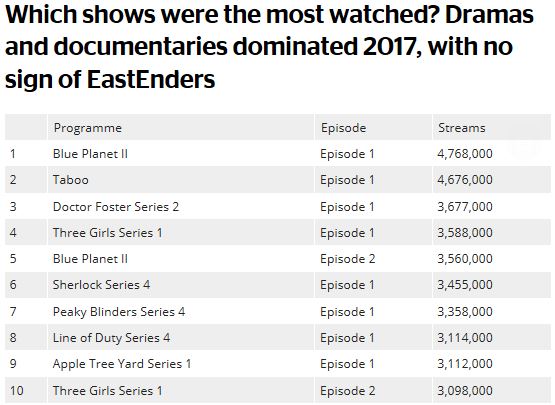
The most watched BBC show is blue planet II which is a documentary focusing on the ocean, its the most watched show as its really easy watching that children and adults can enjoy. As well as that David Attenborough is the narrator, these helps get ratings as he attracts people for being famous in his knowledge in the animal world and his past documentaries.
The BBC relies on there documentaries and dramas to get them rating as the they connect most with the average British viewer. As the ratings show the top 10 is mainly dominated by shows like Sherlock, Taboo and Planet telling us that people enjoy dramas and documentaries the most. All of these shows are higher level BBC budget with blue plant being the most expensive in the top ten. The audiences varies with these shows as they are targeted to different people and shown at different times for example Peaky Blinders is shown after the watershed so children wont be watching it.
Sherlock and Line of Duty isn’t very similar to my crime drama with the unusual crimes and following the point of view of the police but there the only similarities the crimes have a lot of character conflict however mine didn’t have any and just focused on the crime committed.
A BBC crime drama that is very similar too mine that isn’t on the top ten is Luther this show also focuses on a lot of character conflict however it revolves around the criminals just as much as the protagonists. Considering that the only BBC crime drama that is similar to my one isn’t in the top ten this wouldn’t be the best place to show my crime drama. However it does share the gritty themes of some of the others could mean that it might have some success on the BBC.
Netflix
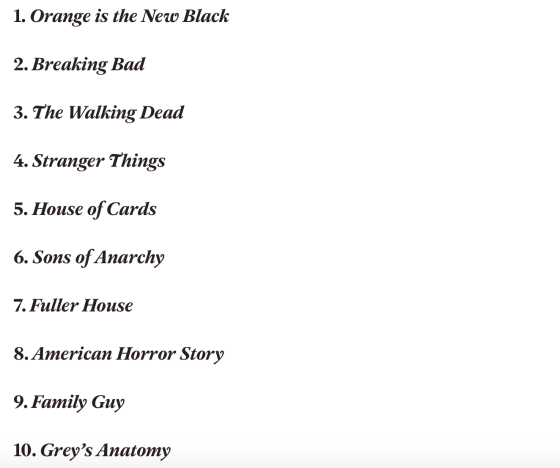
Netflix was founded in 1997 by Reed Hastings and Marc Randolph. After getting fined for not returning a rented film Hastings wanted to create something that would avoid needing to return films. It started as a way to have DVDs to be delivered to you, and then if you bought their DVD player you would get free films. Eventually it became a streaming service for films and made DVD rental companies like Blockbuster obsolete, which led to their shutdown.
The most watched show on Netflix is Orange is the New Black, this show is a comedy drama that focuses on following Piper Chapman the protagonist as she goes to a minimum security prison in America. The plot line is about how she adjusts to life in prison, making friends and enemies, as well as how the other people in her life change. This show is really popular due to there being the perfect mixture of comedy and drama elements so the show can keep it light hearted with jokes but also add in deeper aspects. As well as that the storyline is simple and easy to follow making appealing to a larger audience.
A lot of the most popular shows on Netflix are from the point of view of the criminal such as Orange is the New Black, Breaking Bad and Sons of Anarchy they are the higher ended budget shows but not all produced by Netflix them sleeves. These are popular due to them being more exciting and unexpected with more action, people find these more engaging because they don’t know what its like to be a criminal however most people have a rough idea of what its like to be a police officer. There target audience would be young adults that get bored of slow crime dramas and are more into the action based shows.
None of the most popular shows on Netflix share any similarities with my crime drama as the others focus on the criminals side of the story and have a plot line following controversial topics mainly drugs. However Cryptic is more focused on killings and the polices side therefore I don’t think that my crime drama would be that successful on this platform.
HBO
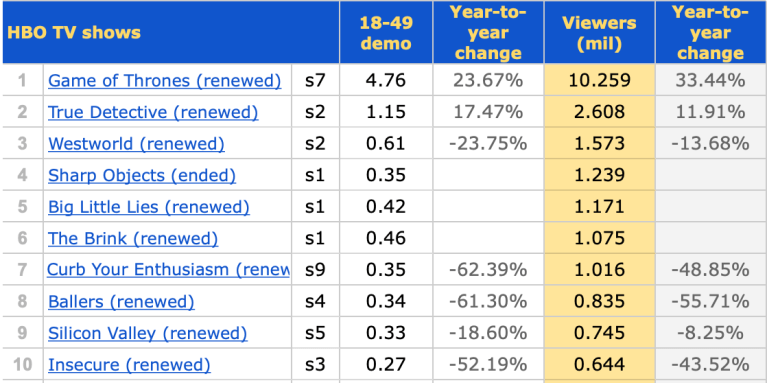
Founded in 1972 by Time Inc Home to be a premium cable company in America with a mix of TV shows and original series such as Game of Thrones and Westworld, mentioned in the most viewed.
The most watched show on HBO is Game of Thrones a action packed fantasy world based off of European medieval history. The show follows many different characters as there families fight for the iron throne. Game of Thrones became very popular due to the detailed and intense storyline that gets the viewer very involved with show making them to get attached to the characters like no other show, for example house Lannister is shown to be the antagonist of the show however there is Tyrion Lannister who becomes a antihero as audiences loved him but hated the side he supported. The series was targeted for younger audiences due to it being a fantasy and full of violence with lots of taboo and controversial topics that take place. However Game of Thrones has gained a large number of fans that have a very varied age gap I think this is due to character progression and gripping storyline that kills of protagonists very often keepings viewers on edge.
The second most popular show on Netflix is True Detective a crime drama that shares some similarities with are production. Such as the show following a very unilinear storyline and also adding in a lot of character progression and conflict. True Detective follows the seventeen year story of two detectives that contrast each other and have violent relationship as they try and catch a serial killer. If are production was to continue as a full episode we would have flash backs throughout episodes similar to the way True Detective does it. As well as that we were going to pace it like this show with a slow progression and scenes of violence.
I think that are crime drama would fit nicely in HBO as it would the perfect mix of action and character progression to grip audiences, just like some of there other show like Game of Thrones and True Detective. As well as that we were aiming for a similar target viewer with young adults as are audiences.
 Charlie G-W Film and TV